Reel Hook Ideas: What to Show in the First 3 Seconds
Reel hook ideas for the first 3 seconds: eight hook types with on-screen examples, what to skip, and how to build a scroll-stopping first frame with AI.
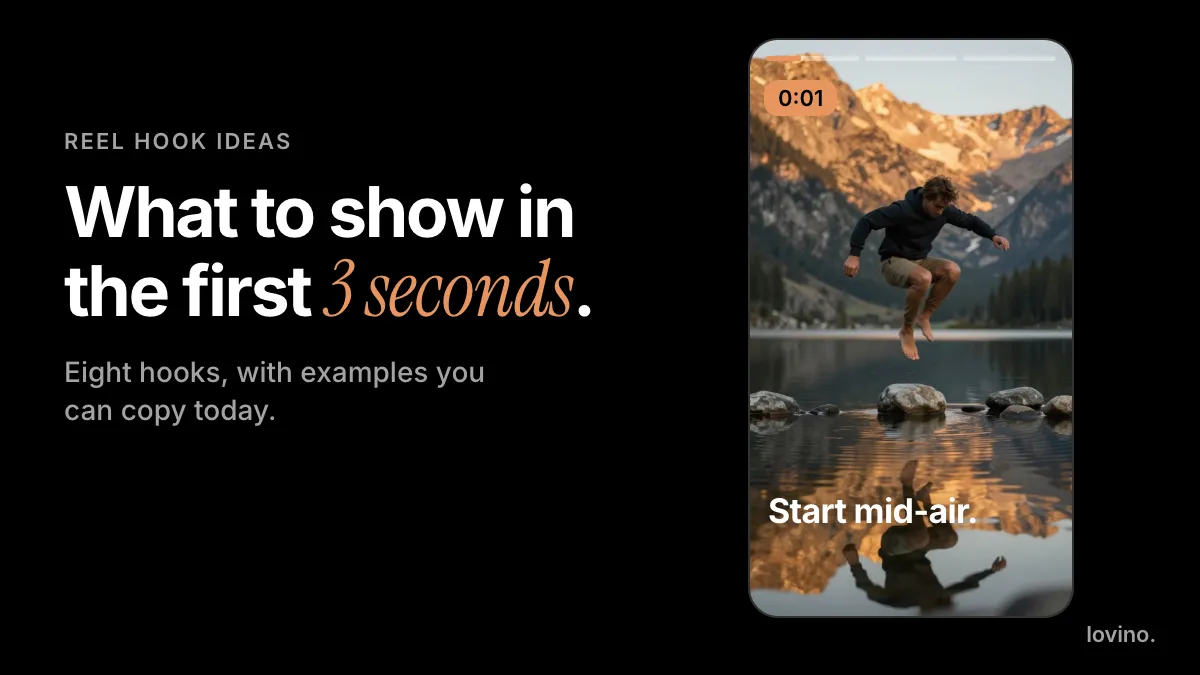
The best Reel hook is the most interesting frame in your Reel, shown first and already moving. Skip the warm-up. Open on the result, the surprise or the question, and put a few words on screen so people know why they should stay.
Below are eight reel hook ideas, each with an example you can copy, plus a short list of what to cut. Instagram publishes no official three-second rule that we can point to, so treat "the first three seconds" as a working habit. It is a good habit: the opening beat is your whole pitch.
What makes a good Reel hook?
A hook does three small jobs in quick order. It shows something worth watching, says what the Reel gives, and leaves a reason to stay.

Instagram's own creator tips point the same way. They suggest you "surprise people" with a big reveal, a punchline or a plot twist, and note that even a small, interesting transition may get people watching more than once. Treat the pacing above as a sketch to adapt, not a rule.
What are the best Reel hook ideas?
Eight hook types, with what to show in frame one and a line of words to put on screen.
| Hook | What you show in frame one | Words on screen | Good for |
|---|---|---|---|
| Result first | The finished thing at its best, then rewind | "This started as one photo." | Tutorials, edits |
| Mid-action freeze | A subject caught mid-jump, mid-pour or mid-splash | "Start mid-air." | Travel, sport, products |
| The reveal | A plain picture for half a second, then the restyled version | "Same photo. New look." | Restyles, makeovers |
| Pattern interrupt | Something that does not belong in the scene | "Our dog, crowned." | Pets, humor |
| The question | A striking frame with a question over it | "Can one photo become a film scene?" | Explainers |
| The count | A number promise | "3 edits that saved this photo." | Tips, lists |
| Extreme close-up | Steam, texture or water filling the frame | "Look closer." | Food, products |
| Point of view | A first-person view of a path or a window | "You, at 6 a.m." | Travel, routines |
Every one of them gives the viewer a reason to stay before you explain anything.
Result first and mid-action freeze
Both start where most Reels end. Result first puts the payoff up front, then shows how you got there. A mid-action freeze finds the most dynamic frame you have and opens on it.
The image at the top of this post is an AI-made frame of someone caught mid-jump over a lake. A frame like that makes people wonder what happens next, and that is the whole job of a hook.
The reveal
The reveal is the cleanest hook for anything to do with photo editing. Show the starting picture for half a second, then flip to the new look, and let the contrast do the talking.

Both pictures above are AI-made, so this is a demo of the effect, not a real before and after. To restyle your own first frame, a tool like Style Transfer repaints a photo in a look such as anime, comic book or watercolor. Style Transfer uses paid credits.
Pattern interrupt
Put something in the scene that clearly does not belong there. A dog on a throne works because nobody mistakes it for a real photo.
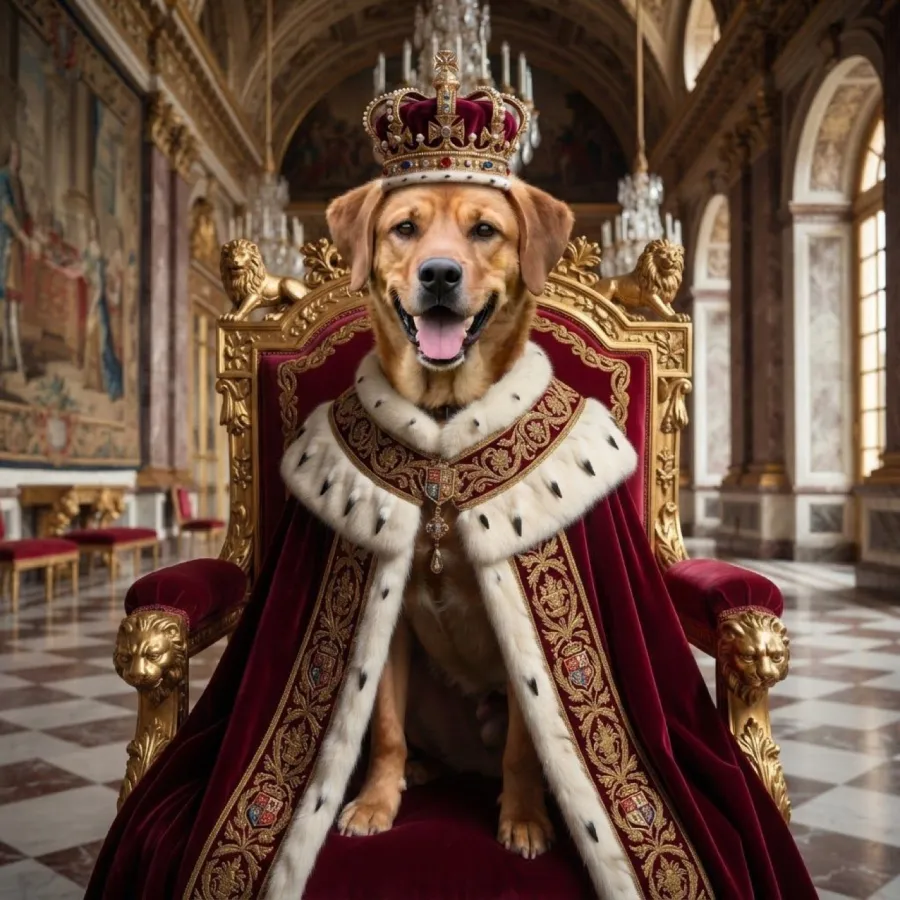
The rule for this one: it must be obviously made up. If a viewer could mistake it for real, it stops being a joke.
How do you build a hook frame with AI?
A hook frame is a single bold image, which is exactly what AI image generation does well, and retries are cheap. A simple recipe:
- Pick the hook type from the table.
- Describe one subject and one action. "Mid-jump" beats "a person in nature".
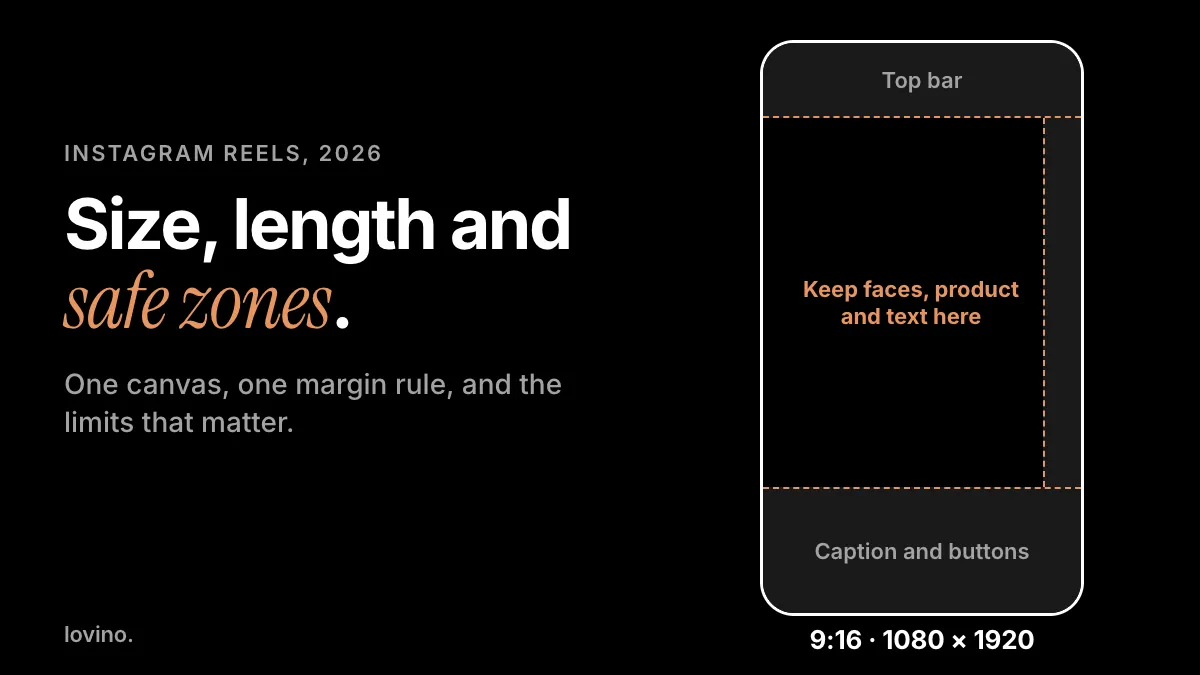
- Set a vertical aspect ratio, because Reels are 9:16. The aspect ratio guide and the Reels size guide cover the sizes.
- Leave room for words. Keep the subject in the middle and the top and bottom calm.
- Animate it if you want the frame already moving. The photo to Reel guide walks through image-to-video.
Prompts to try in the AI image generator, with the aspect ratio set to 9:16:
A young man caught mid-jump above stepping stones on a mountain lake at golden hour, warm side light, mirror-like water, subject centered
Extreme close-up of steam rising from a white coffee cup on a marble table beside a rain-streaked window, soft grey light, calm space above and below
The free daily credits cover images. Turning a frame into a moving clip uses paid credits, and the price is shown before you generate. See pricing.
How do you write the words on screen for a hook?
Words do half the work of a hook, and they should take about a second to read. Three habits help:
- Use a verb and a number when you can. "Three looks, one photo" says what you get.
- Match the picture. The words should explain the frame, not repeat it.
- Keep them short and in the middle of the frame. Top and bottom edges are covered by the interface. The Reels size guide has the margins.
| Weak | Stronger |
|---|---|
| "Check this out" | "One photo, three looks" |
| "My new edit" | "Same photo. New look." |
| "Travel vlog" | "Three calm places in one Reel" |
| "Wait for it" | "Watch the steam, not the cup" |
How do you test which hook works?
Make two openings for the same Reel and compare them. Instagram's trial reels let you share a new reel with people who do not follow you first, for an early read on how it lands. You need a professional account, though Instagram says select creators without one have access as part of ongoing testing.
Change one thing at a time, such as the first frame or the words, and write down what you changed. Keep the hook that gets people to watch to the end, and reuse its pattern on the next Reel.
What should you skip in the first three seconds?
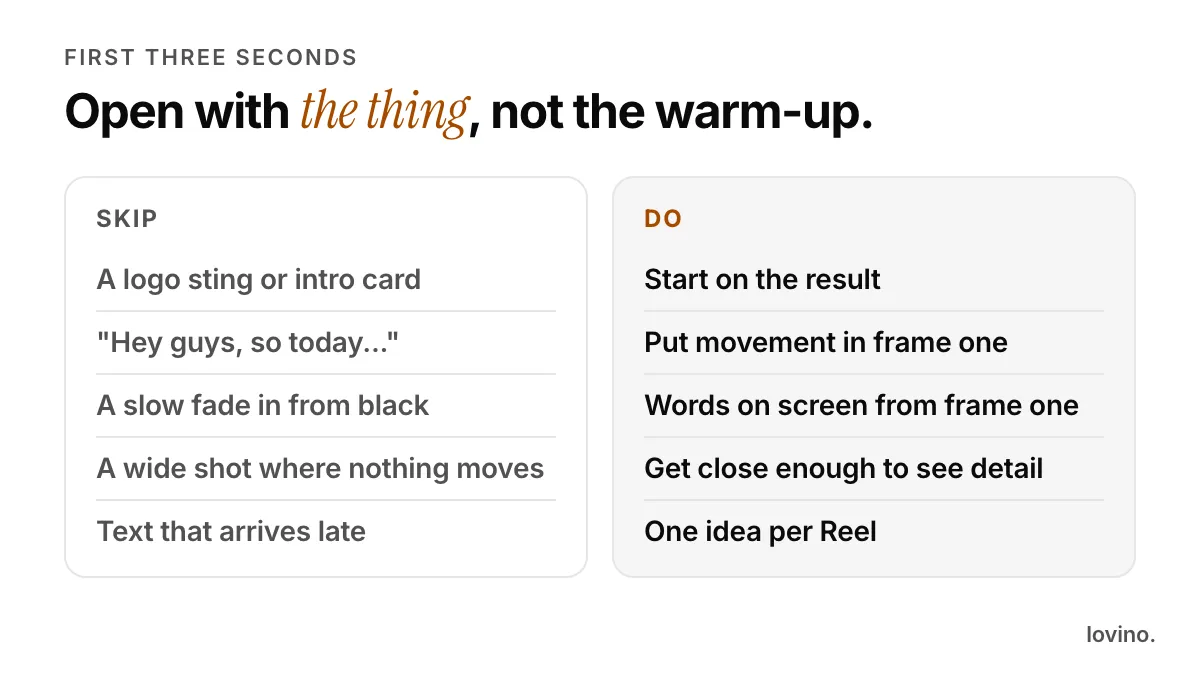
- A logo sting or intro card. Nobody is waiting for it.
- A greeting before the point. "Hey guys, so today..." is a warm-up.
- A slow fade in from black. The first frame is the hook.
- A wide shot where nothing moves. Get closer, or add motion.
- Text that arrives late. If the words matter, they should be there from frame one.
Then check the cover. The first frame and the cover do different jobs, and our guide to Reels cover images covers the second.
What should a Reel hook never fake?
A hook is a promise, and the rest of the Reel has to keep it.
- Do not promise a result you do not show. "How I built this" over a clip you did not build is a bait-and-switch.
- Do not pass AI work off as a real before-and-after. If the reveal is an AI restyle, say so in the caption.
- Keep the payoff real. If the Reel is about a real dish, a real place or real work, the hook frame must show that real thing. AI can style and present it. It cannot stand in for it.
For wording that stays honest, see our AI content disclosure guide.
Try your next hook
Pick one hook type and make only the first frame; one bold image is enough to test a Reel idea. Open the AI image generator, set a 9:16 frame with one subject and one action, and put your words on top. Writing hooks for paid ads instead? The video ad hooks guide covers the first 3 seconds and the next 7.
Questions, answered.
How long should a Reel hook be?
Aim for the first two to three seconds. Instagram does not publish an official hook length, so treat three seconds as a working habit, not a rule. Show the payoff, say what the Reel gives, and give people a reason to stay.
What is a good hook for a photo Reel?
The reveal works well: show the starting photo for half a second, then flip to the edited or restyled version. A mid-action freeze or a close-up on motion, like steam or waves, also works.
Does a Reel hook need text on screen?
Not always, but a few words from the first frame help people understand why to stay. Keep it short, keep it in the middle of the frame, and make sure it is not covered by the caption or buttons.
Can I use AI images for a Reel hook?
Yes. A single bold AI-generated image makes a strong hook frame, and you can animate it with image-to-video. Keep the payoff honest. If the Reel is about something real, the hook should show something real, and AI-made visuals should be labeled where it matters.