AI Safari Photography: Stunning Wildlife Photos Without Travel
Generate breathtaking AI safari and wildlife photography for social media, creative projects, and travel content — no expensive expedition required.
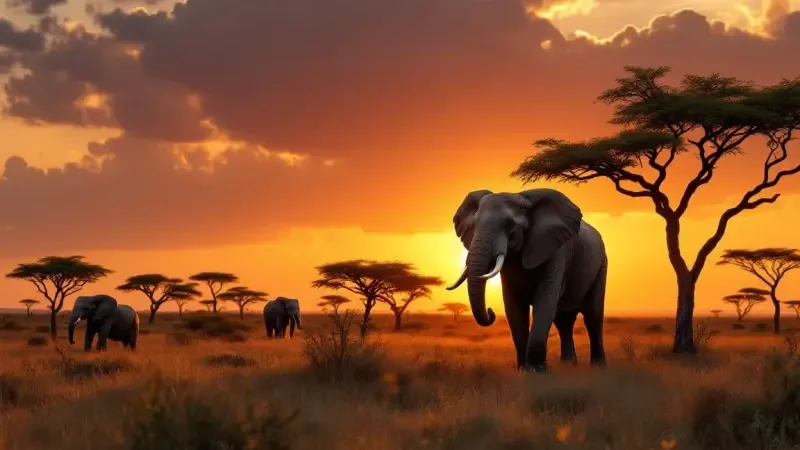
A Kenya safari at golden hour — a lone elephant silhouette against a blazing orange sky, giraffes grazing at the acacia tree line, a lioness watching from the savanna grass. These images represent wildlife photography's pinnacle, typically requiring an expensive African expedition, professional telephoto equipment, and extraordinary patience.
AI safari and wildlife photography tools are changing who can create this imagery. Whether you're building travel content, illustrating wildlife stories, or creating aspirational social media content, AI-generated wildlife photography delivers stunning results without the safari price tag.
The Appeal of Safari and Wildlife Imagery
Safari and wildlife photography occupies a unique position in visual culture. These images evoke natural grandeur, connection to wildlife conservation, aspirational adventure travel, and the timeless quality of Africa's landscapes. These associations make safari imagery extremely effective for travel content, wildlife-focused brands, conservation organizations, and creators building aspirational lifestyle content.
Key African Landscapes for AI Safari Photography
Serengeti and Masai Mara
The vast open savanna of Tanzania and Kenya's border region is the most iconic African landscape. Golden grass stretching to the horizon, flat-topped acacia trees, and the distinctive yellow-orange light of African morning create immediately recognizable imagery. The annual Great Migration — over a million wildebeest crossing the Mara River — is one of wildlife photography's most dramatic annual events.
Distinctive elements to specify: Acacia trees, golden savanna grass, big skies with scattered clouds, red soil, East African morning light.
Okavango Delta, Botswana
The world's largest inland delta creates a unique environment where African wildlife congregates around permanent water. Elephants crossing floodplains, hippos in lily-covered channels, and leopards in palm trees create stunning, water-rich safari imagery different from the typical open savanna.
Distinctive elements: Water channels with lily pads, floodplain landscape, papyrus reeds, African wildlife in wetland environments.
Namib Desert
Africa's oldest desert offers a completely different visual vocabulary — towering red sand dunes, dead trees in ancient dry river beds (Deadvlei), and wildlife surprisingly adapted to harsh desert conditions. The distinctive orange-red dune color at sunset creates otherworldly imagery.
Generate your safari photos on Lovino →
Wildlife Species That Create Stunning AI Photography
- The Big Five — lion, leopard, elephant, Cape buffalo, and rhinoceros — have the most established visual vocabulary and consistently produce dramatic imagery.
- Giraffes against blue sky or savanna backdrop create elegant compositions, especially in silhouette at golden hour.
- Zebras — their graphic black-and-white pattern creates strong graphic images in large herds.
- Flamingos at Lake Nakuru, which hosts millions of pink birds, create some of Africa's most abstract, patterned wildlife imagery.
Placing Yourself in Safari Scenes
Lovino's travel selfie tool enables you to place yourself into safari environments — on a game drive vehicle, at a watering hole at dawn, against a sunset savanna backdrop. Wear khaki, olive, and earth tones that are visually harmonious with savanna environments. Camera-raised poses, scanning-the-horizon poses from a game drive vehicle, and looking-out-over-a-landscape poses all read as authentic safari context.
Scale considerations matter: in vast African landscapes, human figures appear small against the environment. This scale relationship emphasizes the grandeur of the place.
Conservation and Wildlife Organization Use Cases
Beyond personal content creation, AI wildlife photography serves conservation organizations for educational content illustrating endangered species and threatened habitats, campaign imagery representing ideal healthy ecosystem states, community outreach connecting urban audiences to wildlife, and daily social media wildlife content that builds audience engagement.
Ready to create your safari photography? Generate wildlife images on Lovino — experience Africa's wild places through AI photography.
Questions, answered.
Can AI safari photos be used for wildlife conservation marketing?
Yes — conservation organizations use AI-generated wildlife imagery for educational content, social media, and campaign materials, particularly for species and habitats where field photography access is limited or expensive. Disclosure of AI generation is recommended for transparency.
What makes AI safari photography look realistic?
Realistic AI safari photography requires authentic environmental details: correct lighting for time of day, species-appropriate habitats, accurate weather and atmospheric conditions, and natural animal behaviors and poses. Location-specific African landscape descriptions produce more convincing results than generic prompts.
Which African wildlife subjects work best for AI generation?
Charismatic megafauna with well-established visual vocabulary produce the best results: elephants, lions, giraffes, zebras, and flamingos. These species have extensive training data, so the AI produces more accurate and detailed representations.
How do real safari photographers feel about AI wildlife photography?
Opinions are divided. Many professional wildlife photographers have concerns about AI images being passed off as real photography in conservation contexts. For creative projects and clearly-labeled AI art, there's general acceptance. Transparency about AI generation is widely considered the ethical standard.