AI ASMR Videos: How Creators Are Making Viral ASMR with AI (2026)
AI ASMR videos are one of 2026's fastest-growing short-form niches. Learn the full workflow — visuals, audio layering, formats, and monetization.
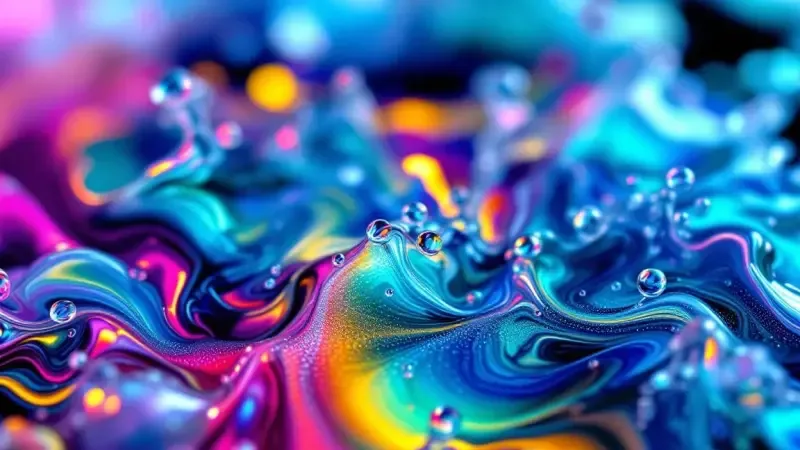
AI ASMR exploded as a niche in late 2025 and is now one of the highest-growth short-form categories on TikTok, Reels, and YouTube Shorts. The visual is hypnotic — kinetic sand cutting, glass marbles falling, mechanical keyboards typing, candle wax dripping — and the audio is satisfying-trigger heavy. The whole format is built for the algorithm's preference for high-completion-rate short loops.
This guide covers what's actually working in AI ASMR in 2026: the formats getting the most volume, the tool stack, the audio workflow that's hardest to get right, monetization paths, and the honest limits where AI ASMR still trails human creators.
TL;DR
- Top formats in 2026: kinetic sand cutting, glass-breaking, soap-cutting, mechanical-keyboard typing, candle-wax pouring, fruit-slicing, ice-crushing.
- The visual is easy. The audio is hard. Most AI ASMR creators undersell the audio — the satisfying triggers are 70% of why people watch.
- Tool stack: AI Video Generator for the visual (image-to-video preferred), a separate audio tool or library for the triggers, a basic editor to sync.
- Cost per Reel: $2–$5. Most creators ship 5–10 Reels per week and stay under $200/month all-in.
- Monetization is possible. A handful of exceptional AI ASMR channels report hitting 100K+ subscribers in 6–8 months — but these are outlier results. Results vary widely and most channels earn little or nothing.
Why AI ASMR took off in 2026
Three things came together:
- Image-to-video models got reliable. Generating a hypnotic loop from a still reference (a slab of kinetic sand, a stack of glass marbles) needed the model to preserve subject identity across a 5-second clip without going weird. Kling 2.0 and Seedance 2.0 both crossed that bar in late 2025.
- Audience interest in real ASMR plateaued. The same human creators have been making the same triggers for years. AI lets the category explore visual concepts no human could film practically — a thousand glass marbles falling at 240fps, a giant block of kinetic sand sliced by an oversized blade, a candle the size of a building melting.
- Algorithmic completion rate bias. Both TikTok's and Instagram's 2026 algorithm changes rewarded high-completion-rate short loops more aggressively. ASMR videos that loop seamlessly get re-watched 3–5 times per viewer; the algorithm reads this as high engagement and pushes further.
The result: a creator who couldn't build a real-world ASMR channel (no studio, no triggers, no time) can ship 10 Reels a week of AI ASMR for under $30 and build a real audience.
Formats that are working in 2026
The top-engagement AI ASMR formats this month:
| Format | What it is | Why it works |
|---|---|---|
| Kinetic sand cutting | Slabs of colored sand sliced by oversized blades | Universal satisfying trigger, easy to generate |
| Glass marble cascade | Hundreds of marbles falling in slow motion | Visual + audio overlap perfectly |
| Soap cutting | Soap blocks cut into thin shavings | Classic ASMR trigger, AI-easy |
| Mechanical keyboard typing | Close-up of keys being pressed | Audio-heavy, visual loop friendly |
| Candle wax pouring | Wax slowly cascading from candle to candle | Slow-cinematic, hypnotic |
| Fruit slicing (giant) | Oversized fruit cut by oversized knives | Surreal visual + crunchy audio |
| Ice crushing | Ice blocks broken into crystals | Audio-rich, fast loop |
| Botanical | Plants growing in time-lapse with rustling leaves | Calming, cinematic |
| Resin / epoxy art | Resin poured over arrangements | Slow-build, satisfying reveal |
| Foam / bubbles | Foam being scraped, bubbles popping | Audio-heavy |
The pattern: visual concepts that have a strong audio counterpart. AI ASMR videos that lean only on the visual without working the audio underperform.
The end-to-end workflow
Step 1: Pick the format (5 minutes)
Pick from the table above. Stick with one format per channel for the first 30 days — algorithmic momentum builds faster on consistency.
Step 2: Generate or source the reference image (5 minutes, ~$0.50)
For most formats, you need a strong reference image of the subject. Generate it on AI Image Generator or use an existing photo. Examples:
- For sand-cutting: a clean overhead shot of a slab of colored sand
- For marble cascade: a stack or pile of glass marbles
- For soap-cutting: a block of soap with the trigger surface clearly visible
The reference image is the seed for image-to-video generation. A good reference saves three rolls of iteration later.
Step 3: Generate the video clip (3–5 minutes, ~$1–$4)
Open AI Video Generator. Pick Kling 2.5 Turbo Pro (Pro plan) for image-to-video that preserves the reference subject cleanly — the workhorse for ASMR — or Seedance 2.0 for native audio that pairs cleanly with the visual. Prompt for the specific motion you want — "blade slicing through kinetic sand, slow-motion, top-down view, 9:16."
For looping content (which most ASMR is), generate a 5-second clip where the motion can be looped without visible discontinuity. This is the hardest part — plan for 2–3 rolls per video to find a clip that loops cleanly.
Step 4: Layer in the audio (10–15 minutes)
This is what separates good AI ASMR from generic AI video. The audio job:
- Find a trigger sound that matches the visual (Freesound.org, ZapSplat, or premium libraries like Soundsnap)
- Layer 2–3 tracks — the main trigger, a subtle ambient, and an optional "satisfying click" overlay
- Mix and time the audio peaks to match the visual peaks (the cut, the impact, the crack)
- Add a slight reverb for depth — pure dry audio feels flat on small-speaker playback
For native-audio output from Seedance 2.0, the model handles audio for the main visual but you'll typically still want to layer additional triggers in post. Pure generated audio rarely matches a curated trigger layer.
Step 5: Edit and loop (10–15 minutes)
Drop the clip into your editing software (CapCut, DaVinci Resolve, Premiere). Trim the clip so the loop is seamless — first frame and last frame should match. Add captions if the format is caption-heavy (most ASMR isn't). Export at 1080×1920 for TikTok/Reels, MP4.
Step 6: Upload with the AI label (5 minutes)
Upload to TikTok, Reels, Shorts. Use the platform's native AI-content label — required by 2026 policy. Caption: short and satisfaction-focused ("kinetic sand cutting," "marbles cascade," etc.). Don't write essay captions on ASMR Reels — the audience is here for the audio-visual, not the text.
Cost per Reel
A typical AI ASMR Reel in 2026:
| Asset | Cost | Notes |
|---|---|---|
| Reference image | ~$0.50 (5 credits) | Generate once per format, reuse |
| Kling 2.5 Turbo Pro video (5s) | 9 credits (Pro plan), ~$0.90 | Sometimes 2–3 rolls = 18–27 credits |
| Audio (royalty-free) | $0–$3 | Free libraries cover most needs |
| Editing software | $0 | CapCut and DaVinci Resolve are free |
| All-in per Reel | ~$2–$5 | Including iteration |
For creators shipping 5–10 Reels per week, monthly spend lands around $50–$150 in credits. Compare to the impossible real-world cost of equivalent content (custom-built rigs, food/material waste, soundproof studio) and the math compounds.
What's working in algorithm distribution
Patterns across AI ASMR channels growing fast in 2026:
- Seamless loops win. A 5-second clip that loops cleanly gets watched 3–5x per viewer. The algorithm reads this as engagement and pushes.
- First 0.5 seconds matters most. The trigger needs to land in the first half-second — viewers thumb-flick past anything that takes longer to satisfy.
- Single-format channels beat multi-format channels. "@KineticSandASMR" with 100% kinetic sand content beats "@AIASMR" with 8 different formats. The algorithm builds audience around one trigger more efficiently.
- Daily posting works. ASMR audiences scroll for the next satisfying trigger; daily content fits the consumption pattern.
- Slightly oversized visuals win. A normal-sized blade cutting normal sand reads as boring; an oversized blade cutting an oversized sand block reads as satisfying. Lean into the surreal scale.
- No talking. No music vocals. ASMR audience wants pure trigger audio. Vocal music and talking voices break the format.
Monetization paths
Top AI ASMR creators in 2026 are monetizing through:
- YouTube AdSense on Shorts revenue — strong CPM on long-watch-time short-form
- TikTok Shop affiliate — link to sand, marbles, soap, candles, keyboards as affiliate products
- TikTok Creator Fund / Shorts Fund — bonus revenue at scale
- Brand sponsorships — ASMR-friendly brands (candle companies, soap brands, kitchen tool brands) sponsoring satisfying content
A small number of exceptional channels report reaching 100K+ subscribers in 6–8 months and $2K–$10K/month in combined revenue — but treat these as outlier outcomes, not a benchmark. Results vary widely and most channels earn little or nothing. The category is competitive but not yet saturated.
Honest limits
Where AI ASMR still trails human ASMR:
- Whisper-trigger content (the original ASMR format — whispered voices, ear-to-ear close-ups) doesn't translate to AI well. Audience expects a real human voice.
- Personal-attention formats (haircut roleplays, makeup application roleplays) need human warmth that AI doesn't carry yet.
- Story-driven ASMR (long-form sleep stories, narrative ASMR) lives on YouTube long-form and AI hasn't replaced the human creators there.
- The audio still needs human curation. Pure model-generated audio on a trigger video reads as off; layering curated trigger audio takes real time.
- Format saturation risk. Sand-cutting and marble cascade are crowded already. The first-mover advantage on new formats matters — pick formats that aren't yet at 1M+ #hashtag uses.
Where to start this week
Pick one format from the table (sand-cutting is the easiest first format), generate one reference image, ship one Reel per day for 7 days using the same format and reference. Total cost ~$15 in credits + 30 minutes per Reel.
If the format reads well and you get any signal from the audience (saves, shares, completion rate above 70%), scale to 2 Reels per day for week 2.
For the broader video model comparison, see Veo 3 vs Sora 2 vs Kling 2.0. For cinematic AI shorts (a different short-form approach), see AI Cinematic Shorts Guide.
Open the AI Video Generator to ship your first AI ASMR Reel today.
Questions, answered.
Can you really make AI ASMR videos that look good?
Yes, especially for visual-driven formats (sand-cutting, marble cascade, soap-cutting, ice-crushing). The 2026 image-to-video models (Kling 2.0, Seedance 2.0) can preserve subject identity across 5-second loops cleanly, which is what ASMR formats need. Whisper-trigger and personal-attention ASMR don't translate to AI yet and still belong to human creators.
Which AI video model is best for ASMR content?
Kling 2.5 Turbo Pro for image-to-video — it preserves the reference subject (the sand, the marbles, the soap) faithfully and runs 9 credits (Pro plan) per 5-second clip, about $0.90. Seedance 2.0 if you want native audio in the same pass, though most AI ASMR creators still layer curated trigger audio on top for better quality. Veo 3 and Sora 2 are overkill for the format and cost more than the use case justifies.
How do I make AI ASMR videos loop seamlessly?
Generate the clip with the first and last frames in matching positions — the subject in the same place, the lighting consistent, the motion at a similar phase. Plan for 2–3 rolls per video to find a clip that loops cleanly. In editing, trim 2–3 frames off each end and apply a short crossfade if needed. Seamless loops get re-watched 3–5x per viewer, which is the single biggest algorithmic signal for ASMR content.
Can I monetize AI ASMR videos on YouTube and TikTok?
Monetization is possible but subject to each platform's policies. YouTube's originality and inauthentic-content rules restrict mass-produced, repetitious uploads — exactly the risk with daily AI loops — and channels that trip them may be demonetized, so use the AI-content label and invest in original, well-crafted content. TikTok Creator Fund and Shop affiliate have similar policy requirements. A few exceptional AI ASMR channels report $2K–$10K/month combined from AdSense, TikTok bonuses, brand sponsorships, and affiliate links — but results vary widely and most channels earn little or nothing.
How much does it cost to run an AI ASMR channel?
About $50–$150/month in credits for a 5–10 Reel/week cadence. Per-Reel cost averages $2–$5 including iteration. Editing software is free (CapCut, DaVinci Resolve). Audio libraries range from free (Freesound) to $20/month (Soundsnap). Total monthly cost is typically under $200 for a content-heavy channel.
Do AI ASMR videos need to be disclosed as AI?
Yes. TikTok, Instagram, and YouTube all require AI-content disclosure for synthetic video as of 2026, with native labels on the upload screen. Use them. AI ASMR audiences are generally accepting of AI when labeled — the format is creative-concept-driven, not authenticity-driven, so the label doesn't hurt reach. Misleading AI content (faking events, deepfakes) is a separate policy issue.